


Animal Hunter: Wild Shooting
4.82.27K Reviews
App Specs
- Version
- 5.0.3
- Updated On
- License
- Free
- Downloads
- 50,000,000+
- Developer
- Fun Fun Studio
- Categories
- Action
- Platform
- Android, iOS
Screenshots
 Analysis by AppCompare
I went into Animal Hunter: Wild Shooting expecting a quick action game, and its appeal comes from how it pairs aiming with a wilderness mood. It is an action title from Fun Fun Studio, built around hunting rather than the faster, opponent-focused combat I usually associate with mobile shooters. That difference shapes the experience: the setting invites you to look and wait, while the central task still asks you to line up a shot and act decisively.
It makes the strongest first impression when I treat each encounter as a small exercise in attention instead of rushing through it. The game is free to play, so it is easy to try without committing money up front. Its Teen age rating is also worth noting for anyone choosing a game to share with a younger player; I would check that rating against the preferences of the household rather than assuming that an animal-hunting theme suits everyone.
How the hunt finds its mood
I focus here on how the visual setting and measured aiming work together to give each hunt its own pace, rather than treating the scenery as decoration. I also consider when that calm, watchful mood is a welcome change from a typical mobile shooter—and when it may feel too slow.
First Impressions
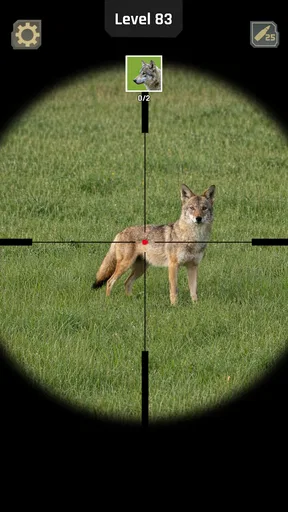
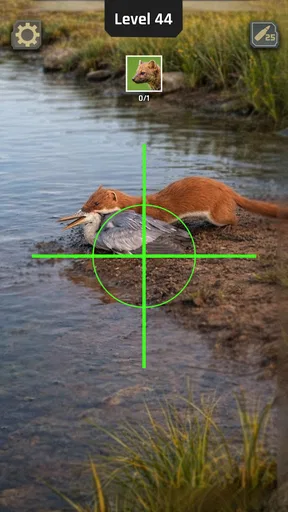
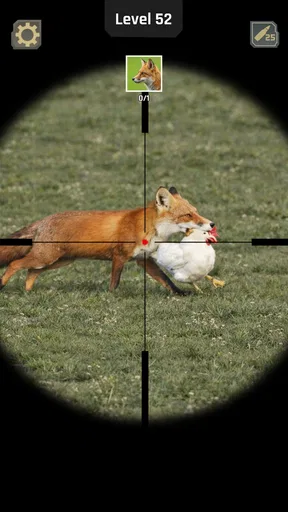
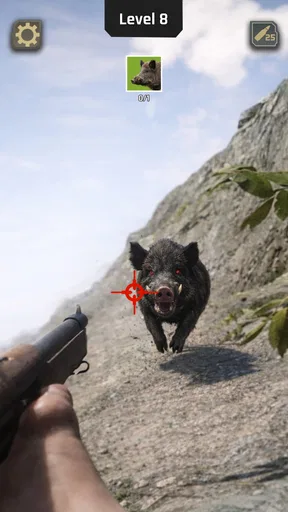
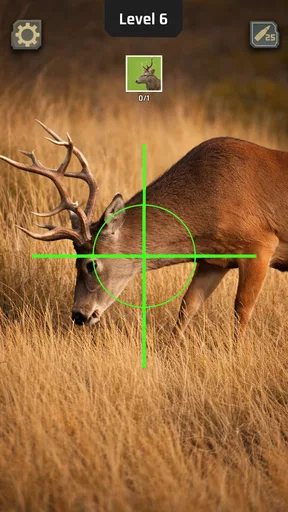
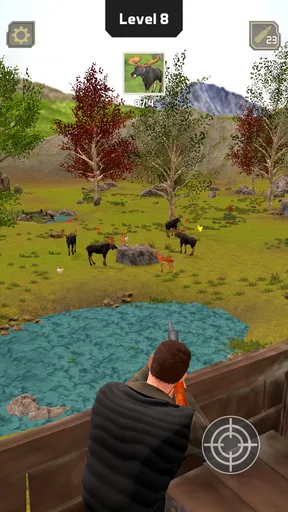
Upon launching Animal Hunter: Wild Shooting, the first thing that caught my eye was the stunning graphics. The developers have done an impressive job crafting lush landscapes that make you feel like you’re right there in the wilderness. From dense jungles to vast savannas, every environment is detailed and vibrant. You can almost feel the rustling of leaves and hear the distant call of wild creatures. It’s a visual treat that sets the stage for the adventures ahead.
The visual approach does more than decorate the action: it encourages me to pause and take in a scene before deciding how to play it. In a crowded commute or a short break, that can make a level feel like a compact change of pace from menus, feeds and games that demand constant rapid input. I would not mistake this for a nature simulator, though. The wilderness is the setting for an action game, and the appeal depends on being comfortable with hunting as its core premise.
Gameplay Mechanics
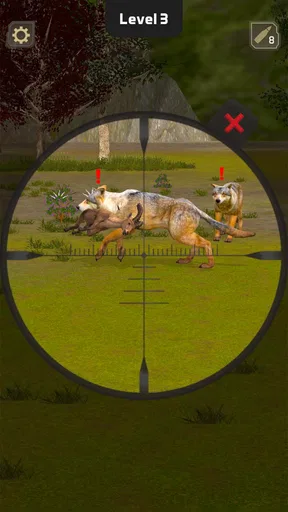
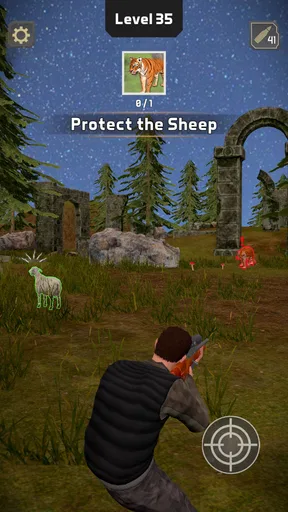
Now, diving into the gameplay, the controls are intuitive, which is always a relief. You don’t need to be a gaming pro to start taking down targets. The tutorial at the beginning does a solid job of walking you through the basics, ensuring you’re ready to tackle whatever comes your way. You’ll find yourself using a variety of weapons, each with its unique feel and strategy. Whether you’re using a sniper rifle for long-range shots or a shotgun for those close encounters, the game keeps you on your toes.
My practical tip is to give the opening guidance your attention instead of tapping through it just to reach the action. A mobile shooter can feel awkward if I have to learn its aiming rhythm while a target is already moving, so taking that first explanation seriously gives me a better chance to judge whether the controls suit my hands. If I am playing one-handed or in a cramped setting, I also prefer to use a short session to test comfort before settling in for a longer run.
Worth Reading Before You Choose

EA SPORTS FC Mobile 26 Is a Bigger Football Game, but It Takes Time

Flipboard Shows What News Apps Must Do Beyond the Feed

Switching to Android Auto Means Rethinking Your Driving Routine

Google Calendar Makes a Crowded Week Easier to Manage

Ludo King Makes the Most of the Minutes Between Plans

Baby Panda World Brings Quick Play to Modern Phones, but Its Game Library Feels Busy
Weapon variety is most useful when I think of it as a change in approach, not simply a checklist of equipment. A long-range shot rewards patience and careful placement; a close encounter calls for a quicker response. That contrast gives the game more texture than a shooter where every encounter is solved by repeating the same action. At the same time, anyone looking for deep tactical loadout planning may find the focus here narrower: the pleasure is in aiming, observing and adapting within the hunt, rather than building a complicated competitive strategy.
What I really enjoyed was the challenge in each level. The game isn’t just about mindless shooting; it’s about precision and strategy. You need to observe animal behavior, plan your shots, and sometimes even track your prey. It’s this blend of action and strategy that keeps the gameplay fresh and engaging.
That observation-based loop is also a useful reason to play with the sound on when circumstances allow. Instead of treating every pause as dead time, I use it to watch what is happening and decide when to take the shot. If I only have a minute or two, I would rather finish a clean attempt than hurry through one and feel that I missed the point. The trade-off is clear: people who want uninterrupted, high-speed combat may find the deliberate moments slow, while players who like a little anticipation have more room to enjoy each level.
Sound and Effects
Let’s talk about sound for a second. The sound design is on point. The crack of a rifle, the rustling of bushes, and the ambient sounds of nature all add to the immersive experience. It’s like you’re there, crouched in the underbrush, waiting for the perfect moment. The soundtrack complements the tension and excitement, making each hunt feel like a cinematic event.
I find that this mix works best when I can listen without competing noise around me. On a bus or in a shared room, I might keep the volume low or play silently; the action can still be followed visually, but the atmosphere loses some of its quiet tension. At home, headphones make the contrast between a calm environment and a sudden shot more noticeable. I would not call sound a requirement for playing, but it is part of what makes this particular game feel like a hunt rather than a generic target practice screen.
That mood also makes it a better fit for a short, focused break than for multitasking. If I am answering messages every few seconds, I am likely to lose the sense of timing that gives the encounters their shape. A more straightforward arcade shooter is the better pick when I want something I can play in fragments without paying attention to the atmosphere. Here, even a brief session feels more satisfying when I give the scene a little room to breathe.
Progression and Challenges
As you progress, the game introduces new challenges that keep you invested. You’ll encounter tougher animals and more complex environments, requiring you to upgrade your weapons and tactics. There’s a satisfying sense of progression, and achieving that perfect shot after a tricky level feels incredibly rewarding.
For me, the most useful way to approach that climb is to treat a difficult level as information rather than a reason to spend immediately. If an attempt goes poorly, I can slow down, look more carefully and adjust how I handle the next shot. That is a sensible habit in any aim-focused game, but it matters especially here because patience is part of the fantasy as well as the practical challenge. Someone who expects every stage to be cleared on the first try may find the tougher encounters frustrating.
The game also offers daily challenges and missions, which are a great way to earn extra rewards and keep the gameplay varied. It’s these little additions that keep you coming back for more, always eager to see what the next challenge will bring.
A realistic way I would fit those activities into a day is to check in during a break, choose one objective and stop when that small goal is done. That gives the game a clear endpoint rather than turning a spare moment into an open-ended grind. If I am not in the mood to repeat a task or focus on a particular objective, I can leave the challenge for another time; the game’s hunting premise is more enjoyable when I play by choice instead of treating every available activity as an obligation.
In-App Purchases
Okay, let’s address the elephant in the room—in-app purchases. Yes, they exist, but they’re not overly intrusive. You can enjoy the game without spending a dime if you’re patient. However, if you’re looking to speed up progress or unlock special weapons, you might consider investing a bit. It’s all about how you prefer to play.
The price is free, with optional purchases ranging from $0.99 to $22.99 per item. I would decide on a spending limit before playing, especially if I were handing the device to someone else. The useful question is not whether a purchase exists, but whether it solves a problem I actually have: if I enjoy learning a level at my own pace, waiting is part of the experience; if I dislike a progression pause, paying to move faster may be tempting but is not necessary to understand the basic appeal.
The game has an average rating of 4.8 from around 378,000 ratings, and more than 50 million installs. Those figures suggest that it has reached a broad audience, but they cannot tell me whether its specific mix of hunting, patience and shooting is right for an individual player. I would use them as context, then make the decision based on the premise and the amount of attention the game asks from me.
Who will enjoy this particular kind of shooter
I would recommend it first to players who want an action game with a slower pulse than a typical run-and-gun shooter. It suits someone who likes lining up a shot, taking a moment to read a scene and seeing a level through rather than relying on constant explosions or competitive matches. It can also work for a casual player who wants a self-contained activity during a break, provided that the break is long enough to focus on a hunt instead of repeatedly stopping mid-action.
By contrast, I would skip it if the idea of hunting animals is uncomfortable, or if I want a story-driven adventure with characters and a developed narrative as the main attraction. It is also not my first choice for a player seeking multiplayer rivalry, intricate weapon customization or fast, uninterrupted combat. Those are reasonable preferences, but they point toward a different kind of action game. The key decision is whether the animal-hunting setup and measured aiming are appealing, not simply whether the player likes shooters in general.
Compared with familiar mobile shooters, this one places more weight on the target and surroundings than on fighting another player. Compared with hunting games that emphasize simulation, its action framing makes it easier to approach as a casual shooter, though that also means it should not be chosen as a substitute for a detailed outdoor or wildlife experience. I see its niche as a focused, stylized hunting game: a middle ground for someone who wants aim-based play without making competitive combat the whole point.
Small choices that make a session work better
One non-obvious trade-off is that the same visual detail that makes the setting inviting can also encourage me to linger when I meant to play quickly. I get more from it when I pick a simple stopping point before starting, such as finishing one level or trying one challenge. That avoids the common mobile-game trap of opening an app for a moment and continuing without noticing how long I have been playing.
I also find it helpful to separate a learning attempt from a progress attempt. On an unfamiliar stage, I can pay attention to how the scene behaves and accept that I may not make the cleanest shot. On a repeat visit, I can use that understanding to be more deliberate. This keeps failure from feeling like wasted time and makes the precision element more rewarding, while still being honest about the fact that some players would rather have a forgiving, instantly readable arcade loop.
If I am choosing a game for a shared device, I would consider both the Teen rating and the hunting theme before installing it for a younger family member. The rating is a useful starting point, not a substitute for knowing what a particular child is comfortable seeing. For an adult looking for a quiet action break, that theme may be exactly what distinguishes the game; for someone who prefers nonviolent or animal-friendly play, it is a straightforward reason to choose something else.
Atmosphere verdict
The release date was August 30, 2023, and version 4.10.12 is the current version. The game is listed for devices running Android 8.1 or later. Fun Fun Studio’s title has a Teen rating, so I would keep that in mind when deciding who should play it. These details matter most when checking whether it suits a device and household; the broader choice still comes down to the hunting theme and the pace of the action.
Overall, Animal Hunter: Wild Shooting is a blast for anyone who loves action and adventure. The combination of stunning visuals, engaging gameplay, and a touch of strategy makes it a standout in the mobile gaming world. Whether you’re a casual gamer or a seasoned hunter, there’s something here to enjoy. So, grab your gear and dive into the wild—you won’t be disappointed!
My own recommendation is more selective: I would try it if the idea of a patient, atmosphere-led shooter sounds appealing, and I would pass if I wanted fast combat or a detailed simulation. The landscapes, sound and deliberate aiming give it a recognizable mood, while its short-session challenges offer a practical reason to return. For me, that combination is its real strength—not that it suits every action fan, but that it knows how to make a mobile hunt feel distinct.
Pros
- Stunning graphics with realistic wildlife environments.
- Intuitive controls for a seamless hunting experience.
- Wide variety of animals to hunt
- enhancing gameplay.
- Offline mode available for uninterrupted play.
- Frequent updates with new challenges and features.
Cons
- In-app purchases can be quite expensive.
- Limited weapon choice without spending real money.
- Advertisements can be intrusive at times.
- Requires a stable internet connection for some features.
- Gameplay may become repetitive over time.
FAQs for Animal Hunter: Wild Shooting
What devices are compatible with Animal Hunter: Wild Shooting?
Animal Hunter: Wild Shooting is available on both Android and iOS devices. Your device should have at least Android 5.0 or iOS 10.0 to ensure smooth gameplay. It’s recommended to have a device with robust processing power to handle the graphics and ensure a seamless experience.
Is Animal Hunter: Wild Shooting free to play?
Yes, the game is free to download and play. However, it contains in-app purchases that can enhance your gaming experience. These purchases may include special weapons, upgrades, or ad-free gameplay. Be sure to check your device's settings if you wish to disable in-app purchases.
What kind of gameplay can I expect from Animal Hunter: Wild Shooting?
Animal Hunter: Wild Shooting offers an immersive hunting experience where players can explore various terrains and ecosystems. You will encounter diverse wildlife and use a range of weapons to achieve your objectives. The game combines realistic graphics with challenging missions to keep players engaged.
Are there any online multiplayer features in Animal Hunter: Wild Shooting?
Currently, Animal Hunter: Wild Shooting focuses on a single-player experience. While there is no direct multiplayer mode, the game offers leaderboards and achievements that allow you to compete with friends and other players globally. Keep an eye out for future updates that might introduce multiplayer elements.
How often does Animal Hunter: Wild Shooting receive updates?
The developers regularly update Animal Hunter: Wild Shooting to enhance gameplay, fix bugs, and add new features. Updates can include new levels, wildlife, and improved graphics. It’s advisable to keep the auto-update feature enabled on your device to ensure you have the latest version.


